POLITICO
For the past eight years, the DEA has been working on a secret investigation, dubbed Project Cassandra, into a large drug syndicate that they traced back to Hezbollah, an Islamist terrorist organization based in Lebanon. The investigation followed cocaine shipments into the United States through the Middle East and Central and South America, as well as money that was laundered through the shipment of American cars to Africa. In all, this drug ring was collecting $1 billion annually from their illegal activities. However, when members of this investigation sought approval for further investigation and prosecution, members of Obama's Justice Department regularly delayed or rejected those requests. Ali Fayad, a top operative for Hezbollah, was detained for two years, but the Obama administration declined to prosecute him, and he was released in 2016, only to re-engage in terrorist activities. A major factor in this investigation is Iran, who was helping to sponsor Hezbollah. At that same time, President Obama had his sights set on reaching a resolution with Iran regarding its developing nuclear program. The biggest bombshell (ha) of the whole investigation dropped when Katherine Bauer, a Treasury official during the Obama administration revealed that "these [Hezbollah-related] investigations were tamped down for fear of rocking the boat with Iran and jeopardizing the nuclear deal.” Essentially, President Obama had been covertly allowing this world-wide multi-billion dollar drug ring, headed by Hezbollah, to function in order to reach his nuclear deal with Iran, Hezbollah's main sponsor.
1. Do you think Obama was justified in neglecting the prosecution of a terrorist organization in order to reach a resolution with Iran?
2. Why do you think this scandal is less well-known than the feud between Donald Trump and LaVar Ball?
Thursday, December 21, 2017

Congress Passes Transformative Tax Reform Bill
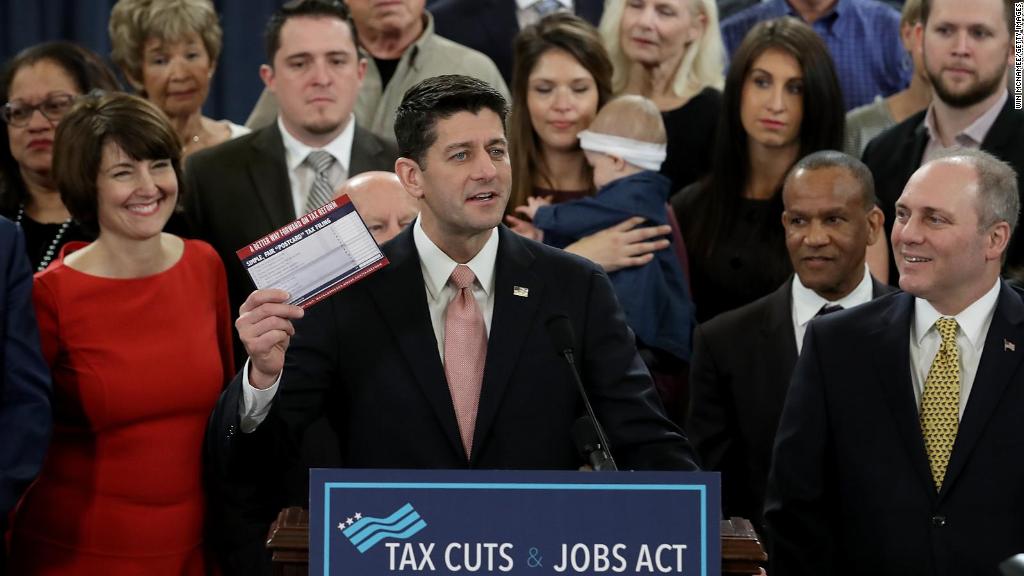
White House, GOP celebrate passing sweeping tax bill
One of Trump’s many campaign promises is coming to fruition. A monumental tax bill has been passed by Congress along the party lines and will completely transform the tax system.
The Republican tax plan lowers individual rates, eliminates personal exemptions, caps state and local tax deduction, preserves smaller but popular tax breaks, eliminates the mandate to buy health insurance, cuts the corporate rate, and eases the tax burden on businesses.
However, with these tax cuts come increases in the deficit. It is projected that although taxpayers will have an 8% tax cut in 2019, in 2027 taxpayers earning up to $75,000 will receive a tax increase.
Questions:
According to a new CNN poll, 55% of Americans oppose the plan. Just 33% say they favor the GOP's proposals to reform the nation's tax code. What do you think these statistics say about our partisan government and our participation within it?
Ryan and Republicans alike have been working toward this goal since 1993. Why do you think it has finally passed?
Monday, December 18, 2017
Trump recognizes Jerusalem

As a country, we as a country left ourselves out of this conflict. We know that Palestine along with Israel are fighting for control for this land. Our stance on neutrality has been carefully maintained for the past 70 years, and it only took a "Tweet" from our President to create controversy. Although our President has identifies Jerusalem as the capital for Israel, our very own Secretary of State, Rex Tillerson even states that we still view Jerusalem as independent from Israel even going as far to state that "Passports of Americans born in Jerusalem will continue to say born in Jerusalem, not Israel. American Government maps won't identify Jerusalem as being inside Israel" (NY times). So where does the president get the power to make a national and very controversial decision that can ultimately affect the well being of Americans all over the world. This not only shows how abrupt our President is, but also illustrates the separation between our President with of all of appointed and elected officials.
1: Should Trump be allowed to give his own personal beliefs on such a fragile international problem?
2: Not only how will Palestine but the Global society react?
3: Will we ever fully recognize the city of Jerusalem as a Capital?
Wednesday, December 13, 2017
Republican Tax Bill in Final Sprint Across Finish Line
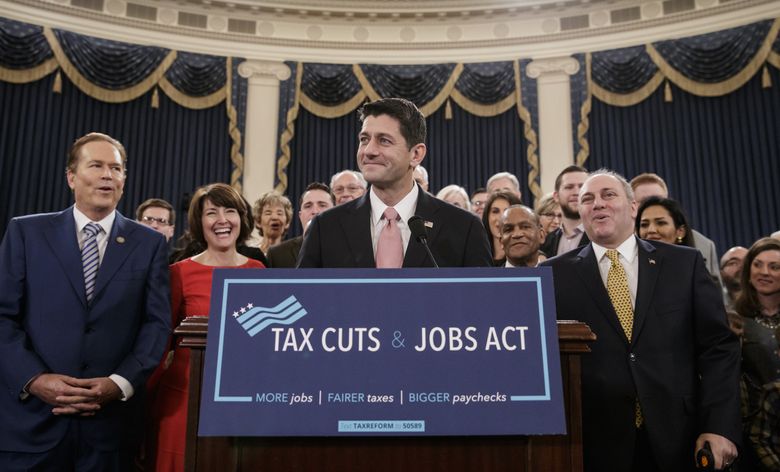
According to a recent article on New York Times, here are some of the significance of the bill:
"The changes[from the draft form the House bill] included a slightly higher corporate tax rate of 21 percent, rather than the 20 percent in the legislation that passed both chambers, and a lower top individual tax rate of 37 percent for the wealthiest Americans, who currently pay 39.6 percent. But the bill will still scale back some popular tax breaks, including the state and local tax deduction and the deductibility of mortgage interest."
Questions:
1. Do you think if this bill passes it would help Republicans in 2018 mid-terms.
2. What is your thought about how partisan Congressmen have become, with not a single Democrat voting for the bill and only one Republican voting against the bill.
Monday, December 11, 2017
Roy Moore's wife, Kayla Moore, denies anti-Semitic claims

Kayla Moore: 'One of our attorneys is a Jew'
Eric Bradner, 2017
On December 12, 2017, there will be an election for the Alabama senate. This has been a very controversial election due to the sexual assault claims brought against Roy Moore, the republican candidate, by numerous women, some of whom were minors at the time of the incident.
At a rally on December 11, 2017, Roy Moore's wife Kayla Moore came up to speak. Mrs. Moore took this as an opportunity to "set the record straight"..."One of our attorneys is a Jew". Obviously her words came as a shock to many, who feel as though this was very insensitive, and only drew more attention to the bigotry of her husband.
1. What will this election mean for the Trump presidency, if Roy Moore is elected?
2. How does offensive language and attitudes towards marginalized groups effect the integrity of the government.
3. If Roy Moore wins this election, will that strengthen or weaken the Republican party in the long term.
Thursday, December 7, 2017
Cyntoia Brown's story: A sex trafficking victim


Additional Resources: Why Cyntoia Brown, who is spending life in prison for murder, is all over social media
After spending 13 years in prison, Cyntoia Brown’s case came to limelight and caught the eye of a few celebrities of a flawed juvenile system. Brown is a victim of sex trafficking whose situation gained public support by major celebrities such as Rihanna, LeBron James, Kim Kardashian etc. Cyntoia Brown’s case attracted the social media massively that celebrities such as Kim Kardashian, hired several attorney’s to join her plea.
When Brown was at the age of 16, she was sex-trafficked by a pimp named “cut-throat”. After being constantly drugged and raped, a 43 year old predator purchased her for sex. She felt unsafe in the environment which resulted her to fight back and kill him with a handgun from her purse. Because of this incidence, she was arrested and was convicted in 2006 as an adult to be sentenced to life in prison. Though she claim of self-defense, the jury rejected her, and found her guilty of first-degree murder and aggravated robbery.
In 2016, Mr. Faison introduced a bill that would require reviews of life sentences for juveniles after they serve 15 years in prison, however it was defeated. He argued that Brown deserves a new trial because she received an unfair and ineffective counsel by a public defender. He asserts that life sentence is unconstitutional under the 8th amendment which prohibits cruel and unusual punishment. Thus, a habeas corpus petition is pending in the Court of Appeals. However her lawyers have been unsuccessful so far.
Questions:
1.) Do you believe the Juvenile System is flawed? Why/Why not?
2.) Does Cyntoia Brown's case deserve a new trial? Was it fair or unfair?
3.) What amendments can be presented in terms of her situation? Was it constitutional or unconstitutional?
Monday, December 4, 2017
Corker Votes Against Tax Reform In Senate Vote practice

Jeff Stein, Dec 1, 2017
In the early hours of Saturday December 2nd, Sen Bob Corker (R-Tenn) Voted against the Senate tax reform bill, making the vote total 51-49. The vote was very bipartisan as Corker was the only republican to join the democrats in voting against the bill. The senator's main issue with the plan is that these cuts will lead to an increase of around $1 trillion to the Federal Deficit. This prediction has also been confirmed by the nonpartisan Joint Committee on Taxation giving that the economic growth could supplement around $400 billion of the total 1.4 trillion cut.

Many Americans support tax cuts without realizing the damage that it does to the deficit. In order to decrease the deficit we must design a budget with income that leads to an annual surplus which can slowly decrease the deficit. The steps to decreasing the immense deficit will be unfavorable but must be acted upon soon to prevent the collapse of our great nation.
Questions:
1. What do you think about the idea of economic stimulation to decrease the budget that is proposed in this tax bill?
2. Could Corker have done more to stop this bill from being passed in the Senate?
Sunday, December 3, 2017
Trump Refers to Warren as "Pocahontas" at Navajo Veteran Code Talkers Event

At a Navajo veterans' event, Trump makes 'Pocahontas' crack
Dan Merica, Nov. 28, 2017
An event was held at the White House on Monday, the 27th of November, in order to credit two Navajo code talkers for their outstanding work during World War II. While all seemed to be going smoothly at first, the event would suddenly take a sharp turn when Trump made a slight racial slur directed towards Native Americans.
While speaking to those being honored, Trump stated, "I just want to thank you because you are very, very special people." Only seconds later would he refer to Elizabeth Warren as "Pocahontas" by saying, "[Navajos] were here long before any of us were here, although, we have a representative in Congress who has been here a long time... they call her Pocahontas!" In addition to the multiple Native American tribes and communities being upset with Trump for his words, others are upset with his actions as well, as he said this all in front of an Andrew Jackson picture, someone who is partially known for hatred, executions, and legislative acts against Native Americans in early America.
Although President Trump had no intentions of offending any of the code talkers, several of those in attendance could not believe what had just happened and displayed that feeling by resorting to almost complete silence.
Questions:
How will this affect Trump presidency in terms of support from Congress?
How much of an effect will publicly apologizing to both, Warren and the Native American tribes/communities, have?
http://www.cnn.com/2017/11/27/politics/trump-pocahontas-navajo-code-talkers/index.html
Net Neutrality Hangs in the Balance

Jon Brodkin
President Trump’s FCC chairman Ajit Pai is currently on track to get rid of net neutrality, which would allow internet service providers (ISPs) to have free reign over how they treat data on the internet. Broadband industry lobby groups have appealed to the SCOTUS in order for net neutrality rules to be overturned, as they have failed in past attempts to overturn the Title II net neutrality order. The lobby groups have insisted that the FCC exceeded its statutory authority by reclassifying ISPs as common carrier services, which are subject to more strict regulations. These lobby groups along with the ISPs CTIA and AT&T have pushed for the SCOTUS to get involved in the issue of net neutrality to declare that mobile internet access is immune from the Title II order of common carrier service regulations, but with FCC chairman Ajit Pai planning to revoke the net neutrality rules sooner rather than later, SCOTUS intervention seems more unlikely. If larger ISPs including AT&T and Verizon end up becoming immune from common carrier service regulations or are classified as information services that are not subject to net neutrality rules, than they would have significant power to weaken the competition with smaller ISPs by controlling their users’ access to these ISPs.
In addition to support from broadband lobby groups, ISPs could also get support from Republican congressmen, who have favored proposed bills in the past that would limit the FCC’s authority over ISPs.
Questions:
1. Do you see net neutrality as a partisan issue even though the revocation of the net neutrality rules would affect most consumers?
2. Is it possible that certain politicians may have business ties to ISPs? How might this affect their position on net neutrality and in turn, affect their constituents' support for them?
3. Do you think that the SCOTUS will get involved in any net neutrality cases in the near future? Why or why not?
Subscribe to:
Posts (Atom)