Sunday, September 24, 2017

More Self Driving Cars On the Way!


CONGRESS UNITES (GASP) TO SPREAD SELF-DRIVING CARS ACROSS AMERICA, Aarian Marshall, Wired, 9/6/17


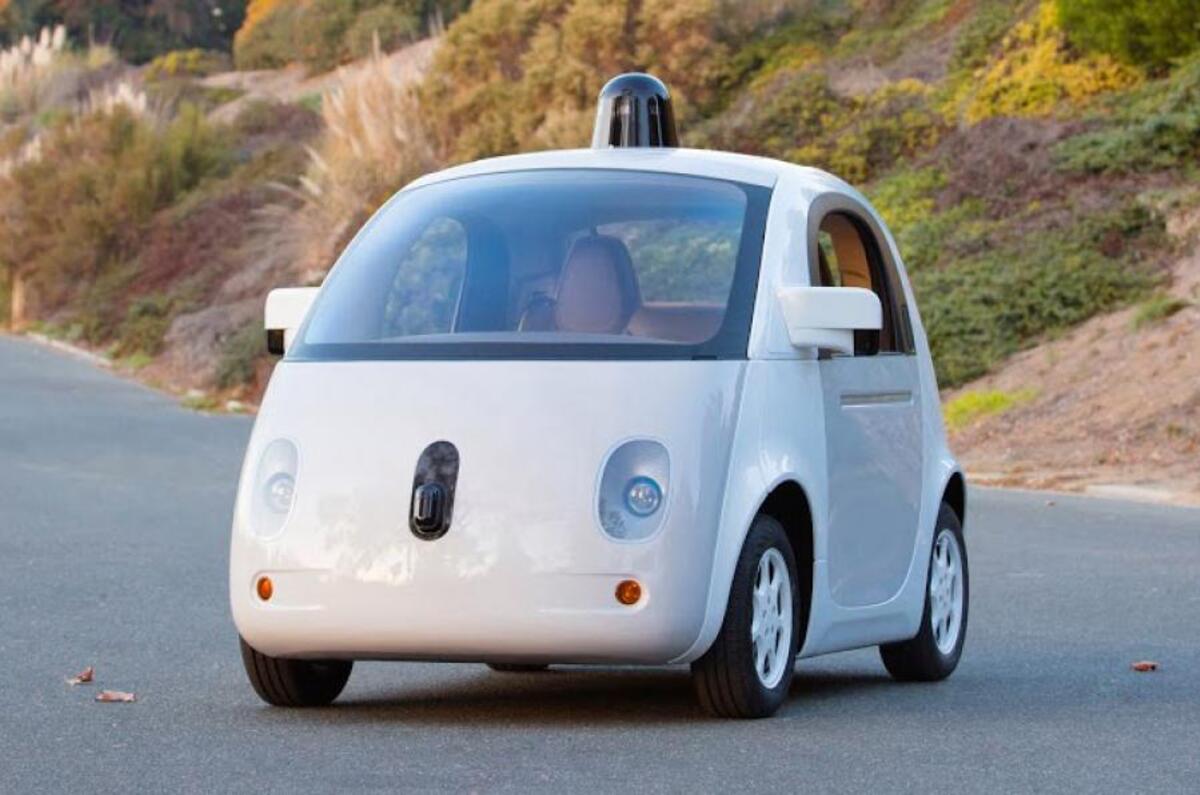
Recently, the House has passed a bill to help regulate and support the making of self driving cars. Although the bill has yet to go through the Senate, it seems promising as the bill gained bipartisan support in the House. The bill covers both how to regulate the privacy of self driving cars and how to make it easier for companies to experiment with and move these cars along so they can be sold to consumers. There are already regulations on what an automobile must have, such as a steering wheel and brakes, but for an autonomous vehicle, these features could actually become dangerous. The solution to take some of the power out of states hands is to officially give the National Highway Traffic Safety Administration (NHTSA) power to regulate vehicle design, construction, and performance. States will still have authority over vehicle registration and licensing, but they'll have a harder time making demands about what goes on inside the car. Today, there can only be 2,500 exceptions to the automobile restrictions already in place, but the bill allows for the NHTSA to raise this number to 25,000 in the first year and double it every following year. This means there can be more testing cars on the road. In addition, the bill regulates what companies can do with the information it has access to such as the location of your car at all times. With technology evolving at such a fast rate, we are likely to see more self driving cars on the road in the next few years.

1. Why do you think this bill gained support from both Democrats and Republicans in the House? Do you think it will be different once it reaches the Senate? Why?

2. Who (if anyone) would be against this bill becoming a law? Why?

3. What are some apparent issues within this bill or excluded from this bill that will likely cause concerns before this bill becomes a law? Explain.


Saturday, September 23, 2017

Gun Silencers For Everyone?

Image result for guns political cartoon


Gun Silencer Bill Advances, Moves to House Floor, Miranda Green, CNN, September 13


A new bill is going to the floor of the House after passing through committee. The bill contains controversial legislation regarding the ability to purchase gun silencers. There are strong support and opposition on both sides and the bill is very controversial. From the video, you get a look at both sides of the argument. The video goes more in-depth on the pros and cons of the bill and what each side is arguing for. Gun rights have always been a disputed topic, since the founding of our nation. With a Republican majority in Congress, the bill has a chance at getting through on some level. But the silencer portion of the bill is what has people concerned. If passed in its current form, the bill would allow people easier access to purchase silencers with less screening processes. This brings a concern to many gun control groups who say that the bill poses a threat to the people's security and safety. The image shows a political cartoon that depicts a school classroom with an armed teacher. The cartoon shows the availability of guns in the country and how the fear that guns instill in some people. 

Questions:
1. Do you think that the idea that guns silencers will help with hearing is accurate or is it a ploy to make more money for gun manufacturers? Why? Should this bill become a law and why/why not?

2. Is there a way to check the influence and power of interest groups? If not, what is an idea or method to control them?

Friday, September 15, 2017

North Korea

North Korea - the threat that doesn't go away - will it achieve nuclear deterrence or will it receive "fire and fury" never seen before?


Image result for north korea missile cartoon

What should the West do? - Mark Almond, Daily Mail, August 29th

As evidenced by another missile launch that traveled over Japan (seriously - a missile flies over your country...) as well as the thermonuclear explosion last week, North Korea continues to flaunt the US and the increasingly strict UN sanctions. The cartoon above reflects the fact the leaders of North Korea have used their military strength and provocations to maintain their relevance and negotiate for terms that guarantee their survival. However, the current level of brinkmanship does seem to be teetering on the edge of actual conflict as South Korea, Japan and the US increase their level of readiness. In fact, President Trump's threats to North Korea underscore the propaganda used by the north that characterizes the US as wolves intent on the destruction of the "defensive DRPK." The defensive argument does relate to the idea of nuclear deterrence, which states that nuclear armed states cannot attack one another because of the massive destruction that would result. Given all the factors, Mark Almond is able to detail 7 options in the article, though none of the options seem viable or desirable. There are obviously catastrophic consequences if there is any direct conflict and Trump's idea that China would simply pressure the North Koreans does not seem to be working. Moreover, Russia continues its limited public support of sanctions while surreptitiously maintaining relations with the Kim regime. Surprisingly, the days of Jim Jong Il's madness coupled with his unique love of basketball and Hennessy seem dreamy compared to the nightmare scenarios that a Trump-Un escalation might bring.

1.  Which of the options in the article provide the best strategy to deal with King Jong Un?  Explain.

2.  Do you think nuclear deterrence theory is accurate and how does that affect King Jong Un's strategy?

3.  Which countries are truly threatened by Jim Jong Un & how does it relate to US involvement in the immediate region near the Korean peninsula?
Trump's Prediction Comes True - Sheriff Joe "will be just fine."


Image result for joe arpaio pardon cartoon

Legal challenge to Arapaio pardon begins - Jennifer Rubin, Washington Post, August 30

President Trump invoked his broad constitutional power to pardon Americans with a somewhat unprecedented pardon of Maricopa Sheriff Joe Arapaio on August 25th as Hurricane Harvey made landfall in Texas.  The visual above reflects the idea that Arapaio was a justifiably tough law figure that was simply "doing his job" as Trump said at an rally in Phoenix earlier in the week.  However, no other president has used the powerful pardon power to help a public official held in contempt of court for violating the constitutional rights of random US citizens.  A public interest group called Project Democracy is challenging the constitutionality of the pardon on the grounds that it violates the 5th Amendment's Due Process Clause as well as the 14th Amendment's Equal Protection Clause.  The group claims that Trump cannot "obviate the court's powers to enforce its orders when the constitutional rights of others are at stake."  Last, many observers suspect that the pardon of Arapaio is actually a message to anyone related to the FBI probe of Trump associates and their connections to Russia.  Anyone under investigation as part of former FBI Director Robert Mueller's probe might resist any inquiries with the knowledge that Trump will use the executive branch's immense power to pardon on anyone that faces actual charges in the future.  Hearings are schedules and the courts will weigh in, though an overturn of a pardon would be unprecedented to the nth degree.

Respond to one of the following:

1.  In light of recent talk of "fixing DACA" and protecting dreamers, how does the Arapaio pardon relate to Trump's general narrative and his specific issues with immigration?

2.  What is the most controversial pardon in US history (Nixon, Rich, Patty Hearst, Draft Dodgers, Confederate Soldiers, Chelsea Manning - her sentence was actually commuted, others...)?

3.  Obvious question - do you think the pardon was reasonable?  Why or why not?